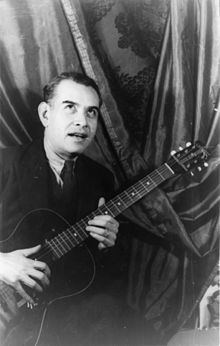
 Rufino Tamayo was born on August 26, 1899, Oaxaca in the south of Mexico.

1899 - 1991
Rufino Tamayo
description
A Mexican artist and monumentalist, graphic artist and sculptor, a vivid representative of the avant-garde, who worked in several new styles and promoted national traditions and culture by his work.
Rufino was a Zapotec Indian by blood, although he did not look like a purebred Indian. After the death of his mother, the boy was brought up by his aunt, in whose shop in Mexico City he helped to trade. In the future, the young artist had a predilection for “fruit” still lifes.
The master received many prestigious awards, his personal vernissages were held, except for Mexico, in the US and Europe. The museum of Rufino Tamayo was opened in the artist’s native city Oaxaca in the south of Mexico. In the capital of Mexico, there is the Museum-Gallery of R. Tamayo, to which the artist donated a large and very valuable collection of paintings by contemporary artists (Picasso, Braque, Leger, Bacon, etc.).
Key ideas:
– In the West, many art historians believe it was R. Tamayo, and not his contemporaries Rivera or Siqueiros, who was the most prominent Mexican artist. Only he was the ablest to “wash” the painting from the taints of different movements of fine art, excessive philosophizing – from all that is not painting itself. There was a miracle of a real talent: through mysterious and semi-abstract figures, through the unusual color gamut the reality came – a little strange, but extremely attractive emotionally.
– Due to his great originality, unique beauty based on the use of authentic national values, re-newed in a dialogue with the elements of the painting of avant-garde artists, the master achieved recognition of his style. R. Tamayo had the courage to declare the presence of a bright, accentuated national cultural heritage in paintings created both in the American and Parisian periods of work. And he was recognized and encouraged at first in foreign countries, and only then at home.
– Tamayo concretized his vision of the ethnos, introducing historical moments, folklore motifs into thematic canvases and fresco painting. While his contemporaries like Rivera, Siqueiros and Orozco were in favor of art, coupled with political events and ideology, Tamayo focused on plastic forms, masterful use of colors and various textures.
– He emphasized the dualism inherent in the ancient Mexican worldview; Rufino Tamayo said about his method of using a limited number of colors, «As the number of colors that are used decreases, the number of opportunities for their compatibility increase”.
– He claimed that a smaller spread of the pallette gives the art of painting more power and actually increases the possibilities of the composition. Such unique color solutions are evident in the painting “Three Singers” (1981). In it, Tamayo uses pure red and purple colors – they reflect both emotion, content and national color. Rufino is often called the “artist of the Sun” – it is symbolical that Tamayo’s sculpture “In Honor of the Sun”, made by the master in 1980, became a business card of the city of Monterrey (the capital of the eastern state of Nuevo Leon in Mexico).
1899
1917 - 1921
1921 - 1929
1930
1940
1950
1956 - 1960
1970
1980
1991
1991
The birth
Entered the National School of Fine Arts
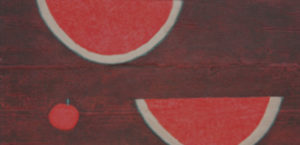 Entered the National School of Fine Arts (San Carlos Academy in the capital of Mexico), continuing to sell fruits. After graduating from school, he worked there as a teacher.
Headed the department of ethnographic drawing at the National Archaeological Museum of Mexico
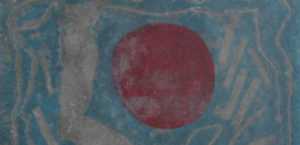 Headed the department of ethnographic drawing at the National Archaeological Museum of Mexico, where he became closely acquainted with folk art. He traveled to the USA many times, mostly to New York; his first exhibitions were held in Mexico City and New York (39 works are in the Weyhe gallery), soon became a professor at the School of Modern Art in Mexico. The personal exhibition of 1929 was highly appreciated by critics and received supportive coverage in the press.
Received a number of orders for the creation of works of monumental wall painting
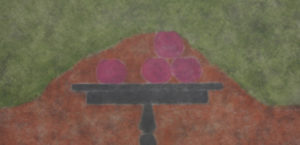 Received a number of orders for the creation of works of monumental wall painting (“Music and singing” for the National Conservatory, 1933). In these works, the influence of the muralistic tendencies is clearly felt. He married pianist Olga Flores Rivas, settled in the United States (the couple lived in New York more than 10 years). Rufino’s first solo exhibition was held in New York, in the gallery of Valentine. In 1938, he received a scholarship to study at the Dalton School. Themes of the works became more complicated, including more and more Indian mythological “ciphers”, symbols of life and death.
«Beasts»
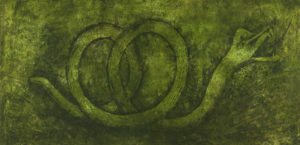 Created the cycle «Beasts» – an example of original Neo-symbolism. The artist visited Western Europe and got acquainted with the best examples of the avant-garde art, first of all, with the paintings of H. Matisse and P. Picasso. In the library of Smith College (Northampton, USA), he created the work “Nature, art and a man”. In 1948, the first major retrospective of Tamayo was held at the Palacio de Bellas Artes in Mexico City.
Tamayo and Olga moved to Paris
 In connection with the political situation, Tamayo and Olga moved to Paris, where they remained for the whole decade. The artist created program pictures “Sleeping Musicians”, “Adoration of the Indian Race”, etc. He made a few monumental paintings for the Palais des Beaux-Arts in the capital of Mexico (1952-1953) and for the UNESCO building in Paris (“Prometheus, who brings fire to people”).
The family returned to Mexico
 The family returned to Mexico, Tamayo built an art museum in his hometown of Oaxaca, as well as a gallery for his large collection of contemporary art (now Museo Tamayo de Arte Contemporáneo). In 1965, he refused the award “for humanism in painting”. He began to acquire avant-garde works, forming his own collection of international contemporary art. Paintings of the master during this period resembled the rock paintings of primitive artists, and sometimes images of aliens, as they are imaginative.
"Rufino Tamayo: the sources of his art"
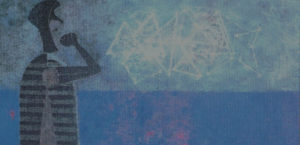 The creation of the documentary film “Rufino Tamayo: the sources of his art”. He repeatedly turned to engraving, book illustration, scenography. In the Guggenheim Museum (USA), the retrospective exhibition called “Myth and Magic” was devoted to the artist.
Tamayo Gallery was opened
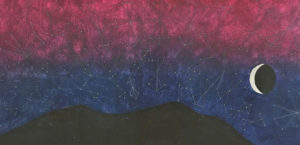 With the assistance and sponsorship of the Alfa Group and the Foundation of Television, Tamayo Gallery was opened; he became the Honorary Doctor of fine arts of the University of Southern California, received the Gold Medal of Merit in the Fine Arts in Spain, the Medal of Honor from the Mexican Senate, the Order of Merit of the Italian Republic. Tamayo’s works have been exhibited all over the world: in the Solomon R. Guggenheim Museum in New York, the Phillips Gallery in Washington, the Cleveland Art Museum, the Naples Museum of Art, Florida, the National Center in Madrid, and others.
He continued to create works of art for the rest of his life
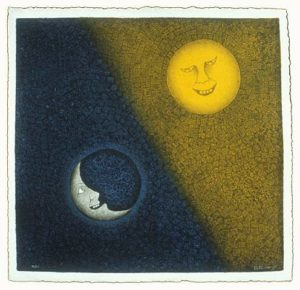
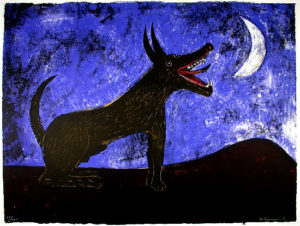 He continued to create works of art for the rest of his life (the last painting “Moon and Sun” was created when the master was 90), became an Honorary Member of the National College of Mexico.
The death
He passed away on June 24, 1991, Mexico City.